Warshati
LiveAuto workshop management
Customers, their cars and their accounts, and the job card from the moment a car arrives to the last shekel collected — with a parts shelf that tells the truth.
- 189
- job cards
- 31
- vehicles
- 102
- automated checks
Demo accounts
Password for all: password — each role sees only what it should.
- Owner
owner@warshati.test - Front desk
reception@warshati.test - Mechanic
mahmoud@warshati.test
Inside the system
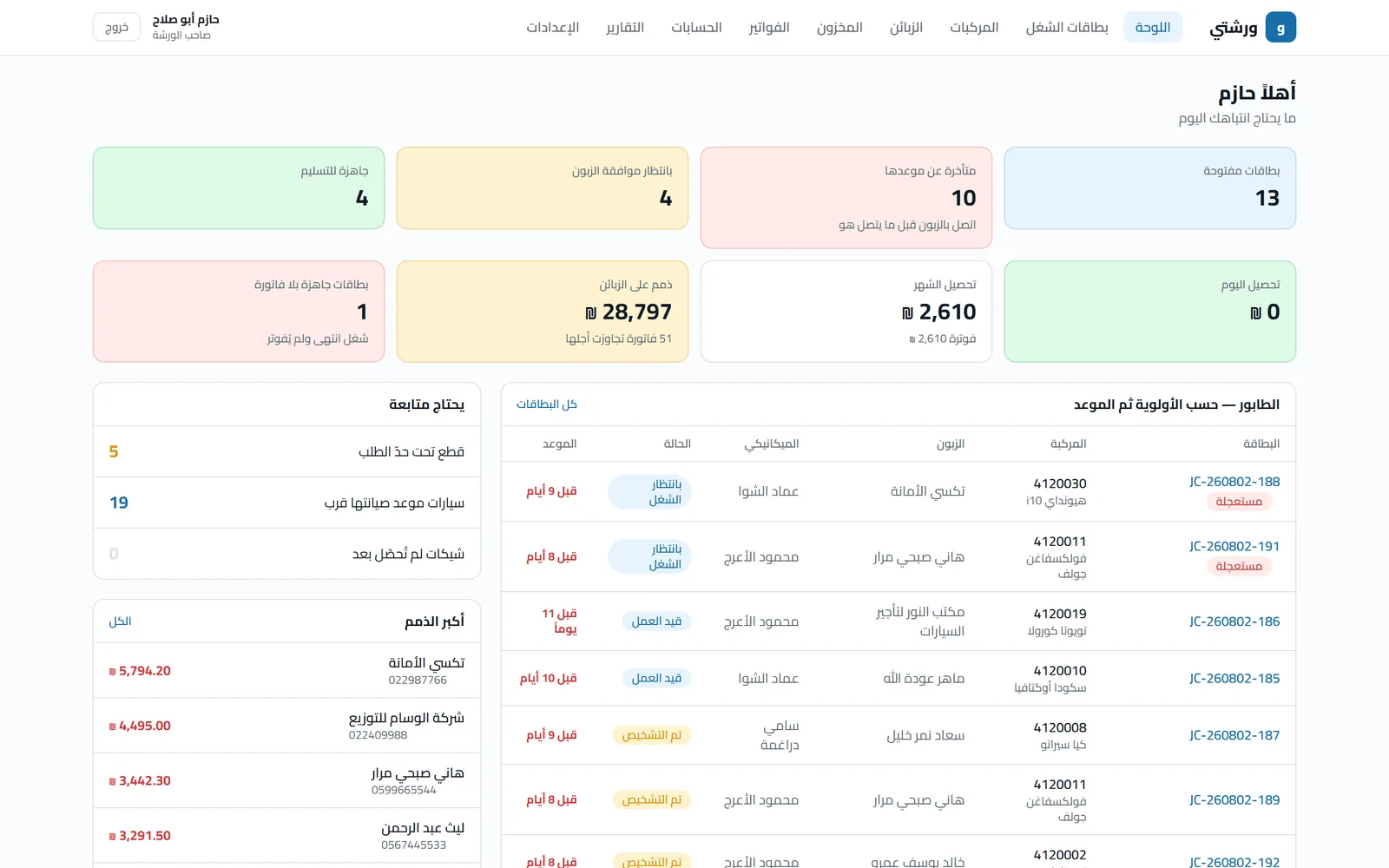
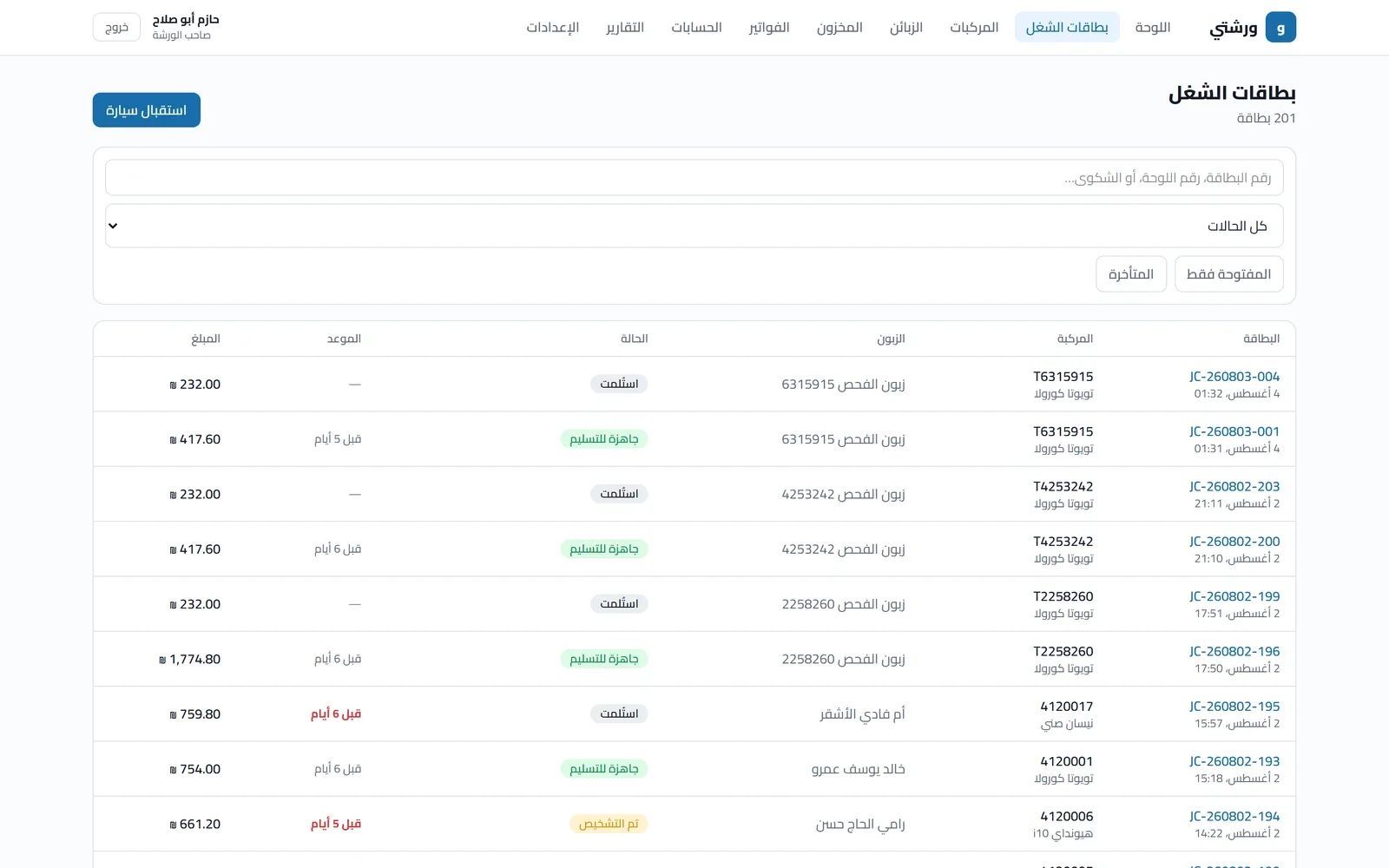
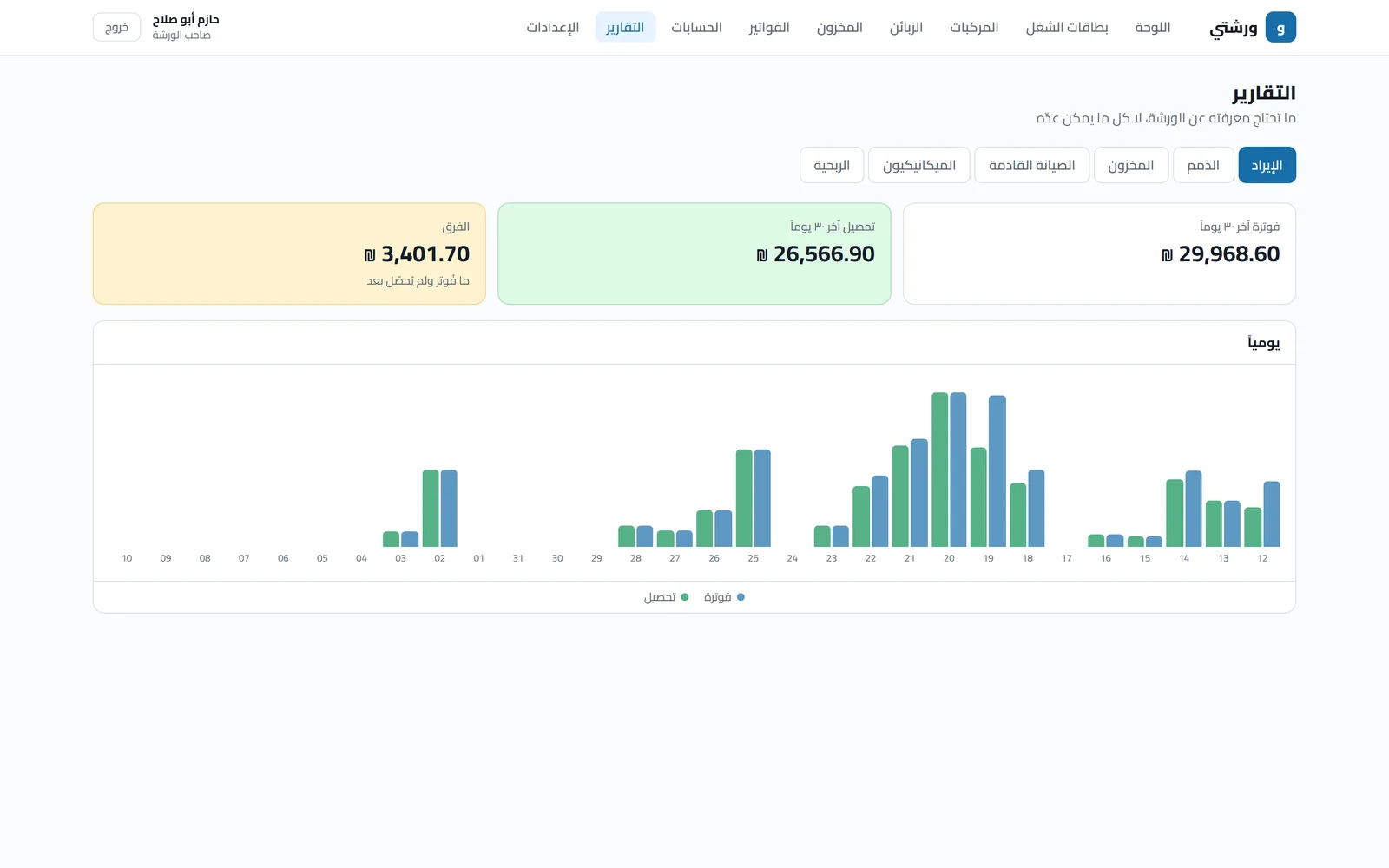
Screens of the system running — not illustrations. Captured automatically from the working build, so they stay true to it.
What it does
The job card
The customer's complaint in their own words, the diagnosis, parts and labour, and the status from arrival to handover.
Vehicles and their history
History hangs off the car, not its owner — sell the car and its record travels with it.
Customer statement
Every movement explained by a line, and a balance that only moves with the line explaining it.
Parts and stock
A part leaves the shelf with the line and returns when it is deleted. A stock count shows the drift before you accept it.
Invoices and collection
An invoice from the card, payments in cash or cheque, and a cheque stays pending until it clears.
Owner's reports
Where the profit comes from — parts or labour — plus receivables and each mechanic's output.
Design decisions
Why it is built this way
Three decisions that cost us time — and each is the difference between a system that gets used and one that gets abandoned.
Stock is allowed to go negative
A mechanic fits the part in his hand whether the system agrees or not. Blocking the line makes him stop using the system, and then the count is wrong and silent. A visible negative number is better than a hidden disagreement.
The statement is appended to, never edited
A correction is a new row and voiding an invoice is a reversing entry, not a deletion. A statement whose past can change is not a statement — and a balance the owner cannot explain to a customer standing in front of him is wrong in practice even when the arithmetic is right.
The mechanic never sees cost price
He reaches the customer and parts lists — hiding those would only mean the front desk typing his job cards for him. But cost, margin and the day's takings stay with the owner alone.
Is Warshati right for you?
Try it yourself first, then tell us what is missing.